


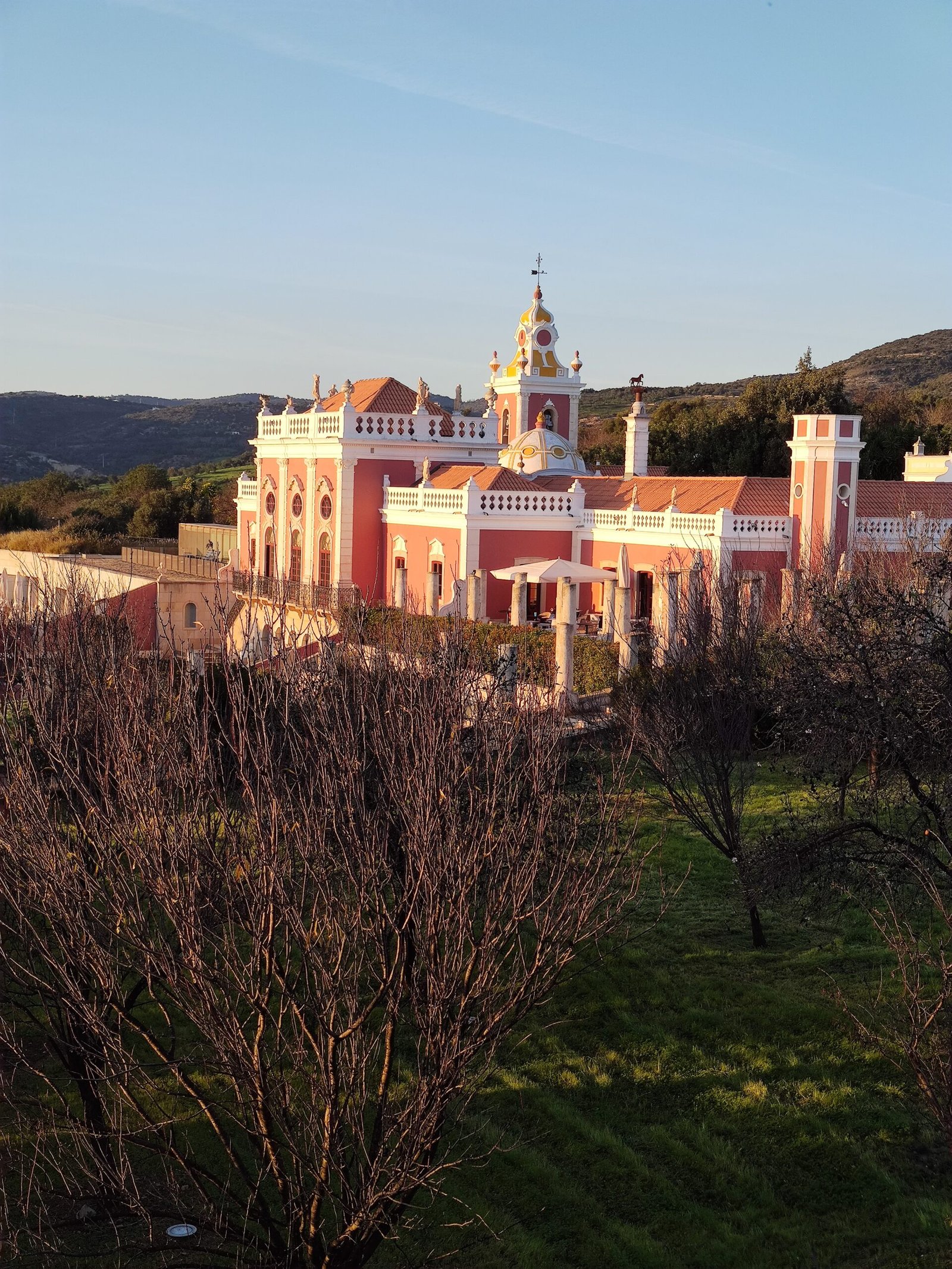
We have probably visited all towns and villages in Algarve but it is Estoi to whom our heart goes out the most. In this blog we will try to tell you the reasons why.
Estoi is often described as one of the most authentic and “untouched” villages in the Algarve. Located about 10 km north of Faro, it sits in the foothills of the Serra do Caldeirão mountains, offering a glimpse into a slower, more traditional Portuguese way of life that has largely vanished from the more commercialized and touristy coastal resorts.
What Makes Estoi Special?
The town’s defining characteristic is its “time-capsule” atmosphere. While much of the Algarve is defined by new construction, tourist facilities, bars and restaurants, Estoi is a maze of narrow cobblestone streets, whitewashed houses with terracotta roofs, and local cafes where residents spend their afternoons in the shade. It manages to feel like a hidden gem despite being very close to Faro.
Despite its small size, Estoi boasts some of the most impressive historical sites in southern Portugal such as the Estoi Palace (now a hotel) and the Roman Ruins of Milreu
Living in Estoi
Living in Estoi is ideal for those who want the climate of the Algarve but without the feeling of being surrounded by tourists. Estoi’s architecture is a fascinating blend of farmers simplicity and “aristocratic” opulence. Because it sits between the coast and the mountains, its design elements pull from both the Moorish-influenced coastal styles and the more rustic mountain traditions.
1. Traditional Houses: The “White and Blue” Aesthetic
The houses in the village core are the epitome of traditional Algarvian architecture.
– The Platband (Platibanda): Many houses feature a decorative border at the top of the facade called a platband. These are often painted in vibrant colors—usually sky blue or ochre—to contrast against the brilliant white lime-wash. They serve to hide the roofline and just to show off and are often decorated with geometric reliefs or floral motifs.
– Algarve Chimneys: Estoi is famous for its intricate, hand-crafted chimneys. Historically, these were status symbols; a homeowner would ask a mason, “How many days of work do you want on my chimney?” The more complex the latticework and carvings, the more prestigious (and expensive) it was.
– Wrought Iron and Stone: Windows are often framed with colored “bars” of paint to ward off evil spirits (a folk tradition), while balconies feature ornate wrought iron work. Doorsteps and windowsills are frequently carved from local limestone.
2. The Village Squares: The Social Living Rooms
The layout of Estoi is centered around its 2 “Largos” (squares), which function as the heart of the community.
– Largo da Liberdade: This is the main square, downtown Estoi, a classic Portuguese “social lung.” It is characterized by its shaded benches and an open-air cafe. The architecture here is a mix of small commercial buildings and the towering neoclassical facade of the Igreja Matriz (Main Church).
– Largo Ossónoba: This smaller, historic square is located up from the church. It used to be the site of the main town’s fountain and is surrounded by some of the most interesting houses in the village, which feature more sophisticated masonry and larger balconies than the standard rural
3. Living Architecture
To live in Estoi is to inhabit these styles. Estoi used to be “em vias de classificação” as a town of historic interest, which meant that the façades of houses could not be touched. It explains why the town kept it authenticity while many other towns have blended in modern buildings. All renovations of old houses thus maintain the external white-wash and platbands but open up the interior to create high-ceilinged, minimalist spaces. The streets remain narrow and cobbled (mostly with calçada portuguesa), meaning the architecture forces a pedestrian-friendly, slow-paced lifestyle where the the square remains the more important meeting placed of locals.
To be honest, Estoi could do with some modernization, especially in terms of cafés and restaurants which would spice up the daily life in the town. We are sure that these venues will eventually come.
